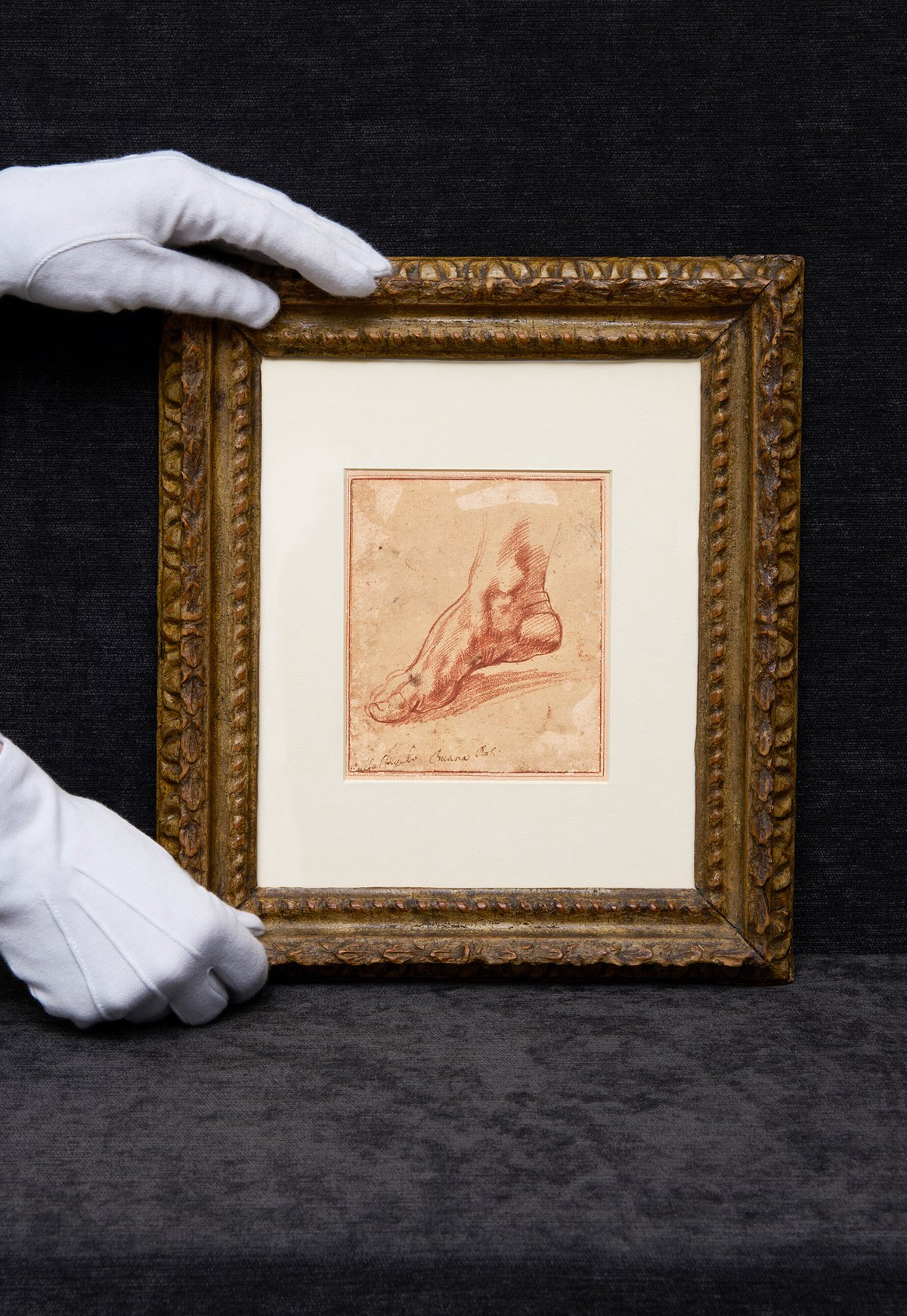

When does a foot cost an arm and a leg? When it’s by Michelangelo—and sells at auction for $27.2m. Sorry, there are so few jokes in art history that we must take them where we can. But the sale of Michelangelo’s newly discovered drawing of a foot at Christie’s in New York in February proved the Old Masters market has more than a leg to stand on. Whoops—another one.
As a perpetual Old Masters optimist, I was glad to see the latest round of New York sales deliver nothing but good news. The market is in excellent health. Across Sotheby’s and Christie’s, the total sales reached just over $185m. Christie’s paintings sale total of $54m was its strongest New York Old Masters result for more than a decade.
Big money
As a sign of strength in depth, Christie’s top lot was a Canaletto showing the Venetian Doge’s yacht, the Bucintoro, on Ascension Day, which made $30.5m. Just seven months earlier an almost identical scene by Canaletto was sold in London (again by Christie’s) for £31.9m. Sotheby’s, meanwhile, established a new record for a Rembrandt drawing when Young Lion Resting (sold by the collector Thomas Kaplan to benefit the wildlife charity Panthera) made $17.8m. To round off the week, Sotheby’s announced that another star lot, an Ecce Homo by Antonello da Messina, had been acquired by the Italian state for $14.9m in a private transaction before the sale.
So perhaps we’ll hear less talk now of Old Masters being ‘out of fashion’. It was never true. If it were, museums such as the Louvre and London’s National Gallery would hardly be spending vast sums enlarging their entrances to cope with the crowds. Nor is it a coincidence, I suspect, that such strong prices came as financial markets were buffeted by a weakening dollar, collapsing crypto and a renewed flight to safe havens such as gold. The greatest art of the past is an enduring part of human culture, and people will always want to see it, understand it and, when they can, own it. Civilisational assets tend, by their nature, to be durable financial ones too.
Jury box-ticking
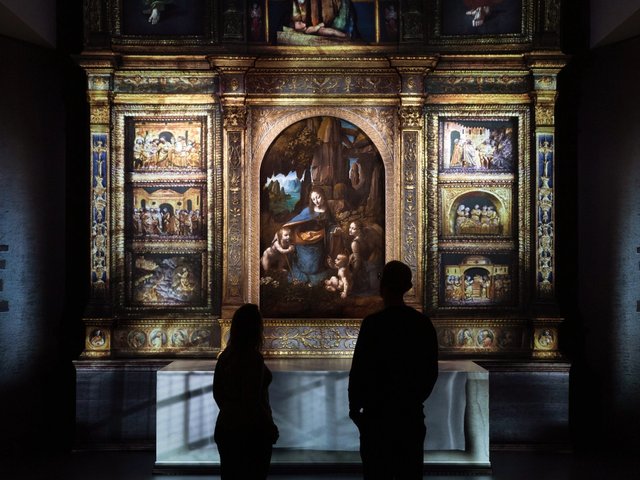
That said, I still see examples of the Old Masters world not having confidence in itself. The latest is the National Gallery, which has decided to ask a citizens’ jury to ‘help shape its future’. The jury is 50 people chosen at random by a charity called Involve, and on the surface this seems like an interesting idea. The museum world is prone to speaking to itself and can easily lose touch with the people it’s supposed to serve. A citizens’ jury might deliver useful outside perspective.
Yet updates on the jury’s work so far suggest it is really just a way for the National Gallery to win points for ‘engagement’. Instead of leaving the jurors to get on with it and come up with their own radical ideas, it appears the gallery is interested in a more managed consultation.
An advisory group of 17 art-world grandees has been appointed to help guide proceedings, and the jurors receive extensive briefings to ‘deepen their understanding’ of how the gallery works. After three sessions so far (of five), the topics discussed include ‘what is the social value of art?’ I searched in vain for something challenging, such as ‘how could the National Gallery better share its collection across the nation?’
I suspect there will be pages of warm, vague words when the project ends, and congratulatory pats on the back for ‘inclusivity’. The price for all this? £250,000. And that, alas, is not a joke.